Transcription of the video above
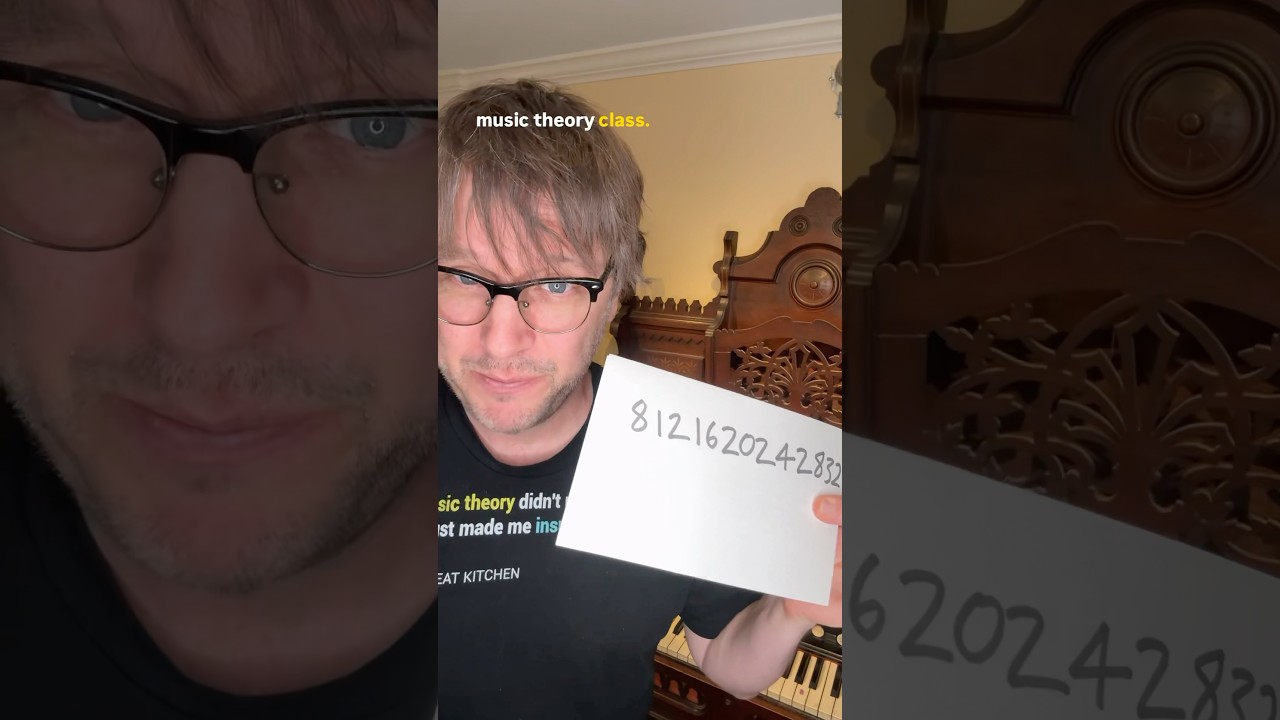
This is one of the first lessons I teach in a music theory class. You’re going to take a look at this number and you’re going to remember it. Got it? No, of course you don’t. And why would you? Because the biggest music theory hack has nothing to do with reading music or memorizing chord names. An experienced musician or producer doesn’t listen to a piece of music and see a long string of notes or chords any more than you would remember this number as a string of digits. At least before you realize that this was just a pattern. And in this case, it’s the four multiplication table.
Your first task in understanding the world of music is to start identifying the patterns that your ear knows perfectly well, but that you may not be able to verbalize. You don’t need to learn every scale, and you don’t need to know every chord in the universe. There are about 10 of them that do the heavy lifting, and those are mostly variations of two or three archetypes. Most chords do specific things and generally work in predictable ways.
But if you never learn to identify the seams that divide the structural elements of a song, all these notes and chords are going to look like one random string. You’re going to have a much harder time organizing the ideas behind them.