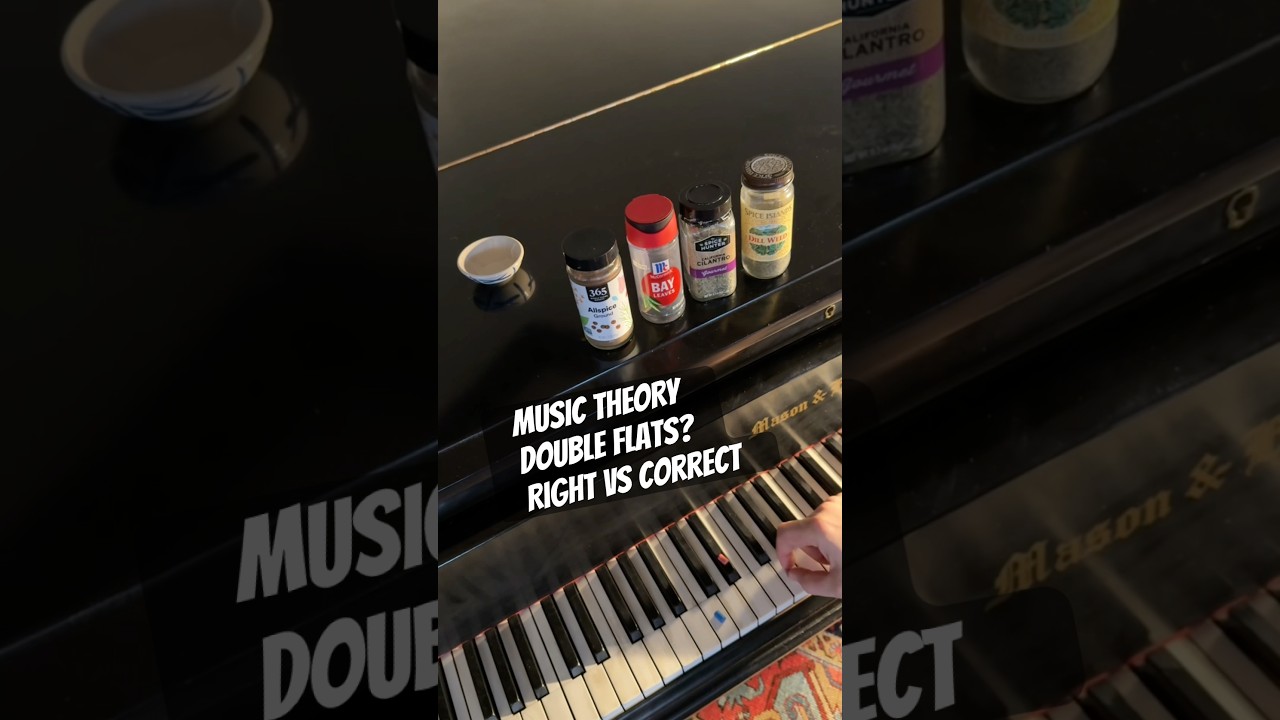
Transcription of the video above
If you’re someone who’s frustrated with music theory, this is where things can start to feel a little wonky. Here we’ve got ourselves a real music dilemma, because this is an A, and this isn’t. It’s a question of context, and it’s one of the breaking points between what’s right and what’s correct. I know this might sound a little strange, but there is a difference, and it’s really important. This is the note A because it’s two half steps, a whole step, above this note. But what if I told you this isn’t an A at all? In certain circumstances, it’s B double flat. And that’s not a technicality, it actually behaves differently. B double flat is one whole step below a B. What you want to call it depends on where it sits in the scale. And while this usually isn’t a hill anyone needs to die on, it does expose a really important idea. When you name something, you’re telling someone how to think about it. In music theory, B double flat and A might sound the same, they are enharmonic, but they serve different purposes. The note’s function depends on its relationship to its neighbors, and that changes depending on the key. You’ll find double flats and double sharps in keys that most people avoid, and that’s okay. But the concept behind them, the idea that context determines meaning, that’s not optional. It’s one of the first things that separates pattern memorizers from musicians who actually understand what they’re hearing. If you’ve hit a wall in your theory education and you feel like things are getting unnecessarily complicated, it might be because you haven’t crossed this threshold yet. But once you do, a lot of things start to click.